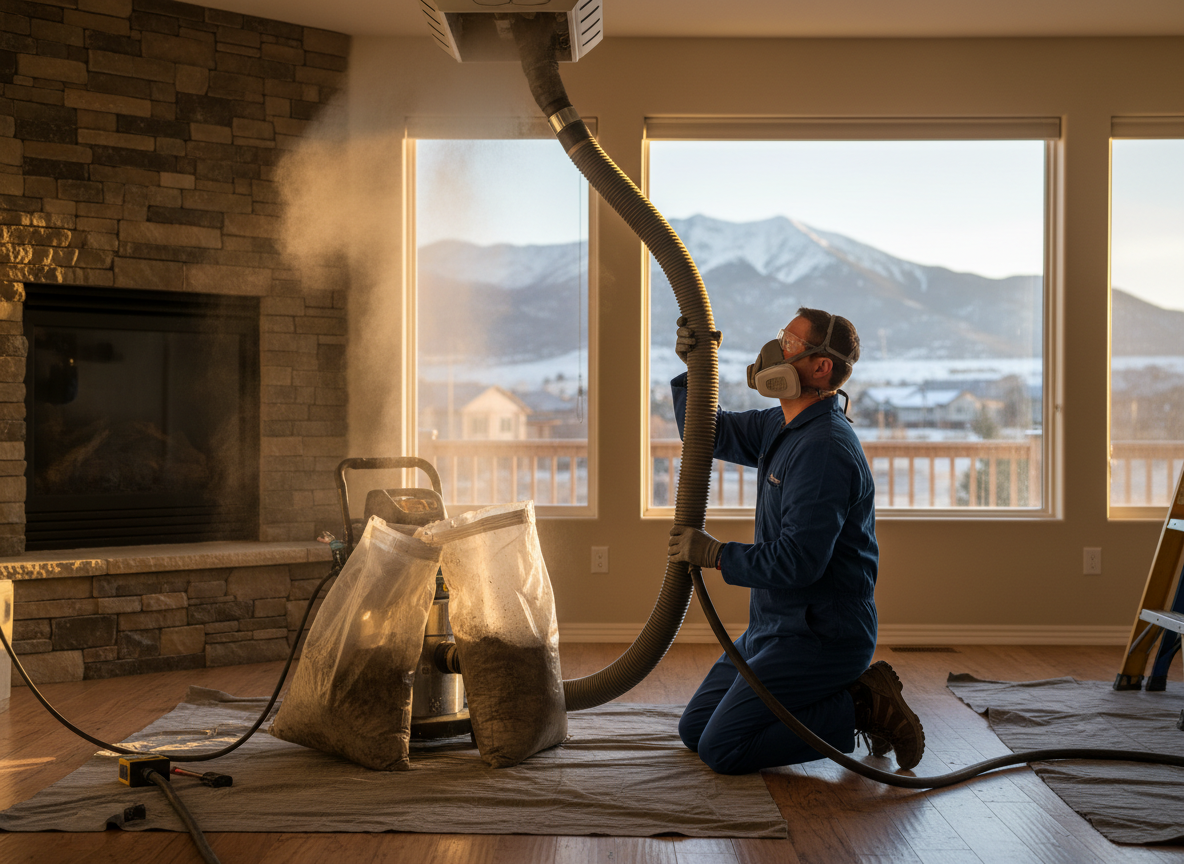
Colorado Springs sits in a semi-arid high-plains climate where hot summers and cold winters drive constant dust movement across El Paso County. Older homes in Old Colorado City and Broadmoor often have original ductwork that collects fine grit from Pikes Peak winds and pollen from Cheyenne Mountain slopes. When a sudden spike in particulates hits, residents notice it first through HVAC registers, especially after the first cold snap forces furnaces to run hard. Emergency calls frequently come from Briargate and Rockrimmon neighborhoods where newer builds still pull in outdoor debris through unsealed returns during high-wind events.
Terrain and soil conditions add another layer. Loose high-plains dirt easily enters crawlspaces and attic ducts in homes near Garden of the Gods and the United States Air Force Academy. After a dry spell or nearby construction, this material migrates into supply lines and gets redistributed when systems restart. Technicians must account for tight access points in Manitou Springs hillside properties and the longer runs common in Fountain and Security-Widefield ranch houses. Negative-pressure containment becomes essential to prevent cross-contamination into living spaces during these urgent cleanings.
Winter furnace operation combined with occasional wildfire smoke from surrounding areas creates the most frequent emergency triggers. Cold nights push systems to cycle longer, loosening accumulated dust that then circulates. Service teams based at 30 E Pikes Peak Ave respond across Pueblo and nearby towns when homeowners report immediate breathing issues or visible debris. The work requires isolating affected zones quickly while protecting existing insulation and registers that may be decades old.
Technician insight
In Colorado Springs the thing that catches most people out with Emergency Air Duct Cleaning is how quickly high-plains winds push fine dirt into older ductwork in Old Colorado City and Broadmoor once the furnace kicks on after the first freeze. Homeowners often assume the problem is just the filter when the real buildup sits deeper in long runs that only surface during sudden cold snaps.
Sudden Dust After First Cold Snap
A Briargate homeowner called after thick gray dust appeared on surfaces the morning the furnace first ran hard. Inspection showed years of high-plains grit loosened in the main trunk line feeding the upstairs bedrooms. The crew isolated the system, applied negative pressure, and extracted the material before it recirculated. Airflow returned to normal and no further dust appeared once the heat stayed on through the week.
How it works
- 1
Intake And Dispatch
Gather details on symptoms, home location, and timing, then dispatch a crew within hours from the Pikes Peak Avenue base.
- 2
On-Site Assessment
Inspect registers, returns, and furnace in neighborhoods such as Broadmoor or Manitou Springs to locate the contamination source.
- 3
Containment And Extraction
Set up negative pressure, seal affected sections, and use rotary brushes and HEPA vacuums to remove built-up material without spreading it further.
- 4
Post-Clean Verification
Run the system, check airflow at multiple points, and confirm no visible residue remains before restoring full operation.
Pricing
Emergency response carries a premium over standard appointments due to after-hours mobilization and rapid scheduling across El Paso County.