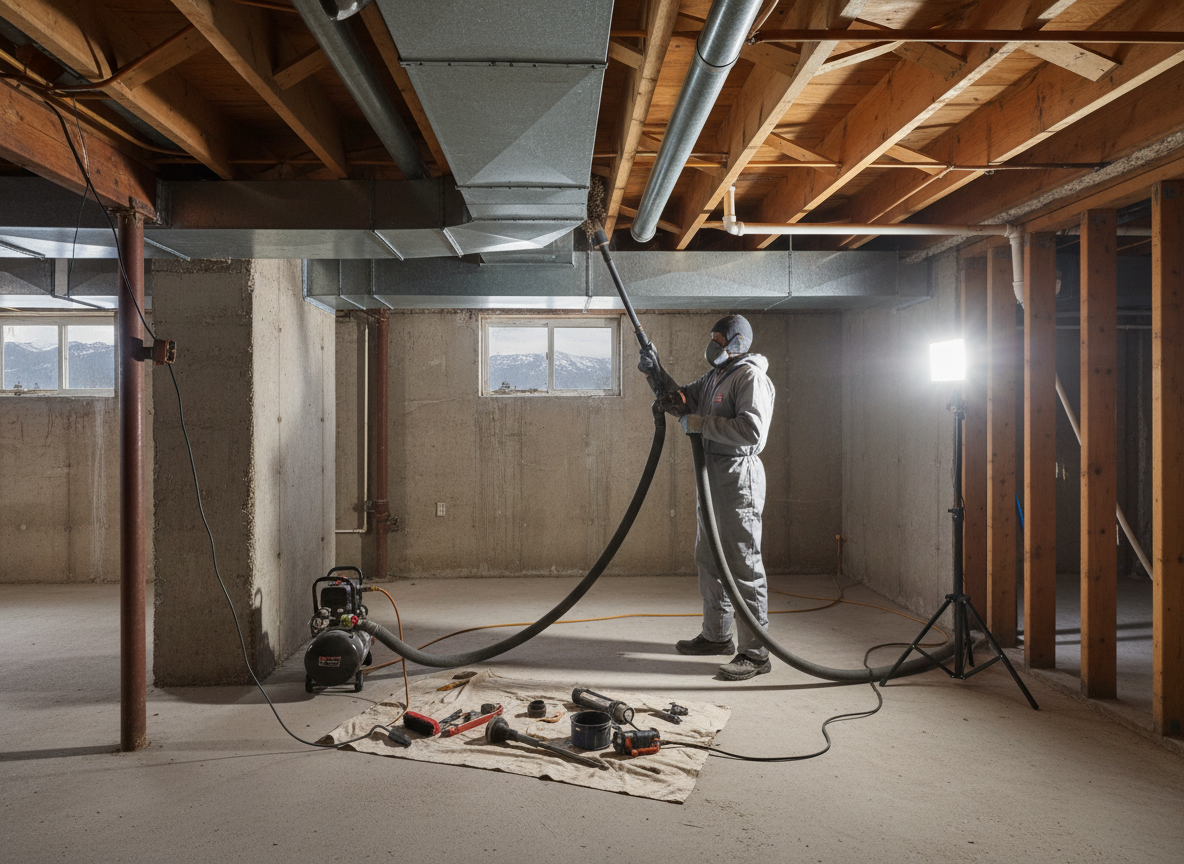
Basements in Colorado Springs homes, especially those built before the 1980s in neighborhoods like Old Colorado City and Manitou Springs, often feature older metal ductwork that collects fine silt carried in on dry winds from the high-plains climate. This dust settles heavily in lower levels where airflow is slower and humidity stays low even during hot summers. Technicians must account for narrow access points and occasional radon mitigation systems common in El Paso County basements before starting any negative-pressure cleaning.
Cold winter temperatures around Pikes Peak and Cheyenne Mountain drive longer furnace runtimes, pushing more airborne particles through basement returns. Homeowners in Broadmoor and Briargate frequently notice musty odors after snowmelt because unsealed crawlspace connections allow soil moisture to affect ducts. Proper cleaning requires sealing off the HVAC system at the air handler first to prevent cross-contamination into living areas above.
Service calls near the United States Air Force Academy and Rockrimmon reveal that newer tract homes still suffer from construction drywall dust trapped in basement trunks if the original installers skipped thorough vacuuming. In contrast, properties closer to Security-Widefield and Fountain sit on different soil types that contribute more alkaline dust, requiring extra filter changes after cleaning to maintain airflow.
Technician insight
In Colorado Springs, the thing that catches most people out with Basement Air Duct Cleaning is how quickly fine high-plains dust resettles in older homes around Old Colorado City once winter heating kicks in. The dry climate plus long furnace cycles means basement returns pull in extra silt from unsealed floors, and skipping the air-handler seal step spreads it upstairs.
Broadmoor Basement Dust After Winter
A homeowner in Broadmoor noticed reduced airflow and a dusty smell after months of furnace use. Inspection showed heavy silt coating the basement return trunk connected to an older slab. We isolated the system, agitated and extracted the debris, then verified clean airflow before reconnecting.
How it works
- 1
System Mapping
Locate all basement supply and return runs, noting connections to the main air handler and any shared walls with crawlspaces common in El Paso County homes.
- 2
Isolation and Sealing
Block off the furnace and vents to prevent dust migration into upstairs rooms during negative-pressure cleaning.
- 3
Agitation and Extraction
Use brushes and compressed air to loosen debris from duct walls, pulling it through a HEPA-filtered vacuum stationed outside.
- 4
Final Inspection
Check registers and the air handler for remaining residue before restoring full system operation.
Pricing
Cost depends on basement square footage, duct age, and access difficulty; request an on-site assessment for a firm quote.