In Colorado Springs the semi-arid high-plains climate sends fine dust and lint into every vent run, while cold winters keep dryers running longer in homes across Old Colorado City and Broadmoor. Older single-story houses common in those neighborhoods often have 20- to 30-foot horizontal runs with multiple elbows that trap lint faster than newer builds in Briargate. Rigid metal venting is required by code yet many older installations still use flexible sections that collapse and collect debris, creating hidden fire hazards that only show up after repeated winter use.
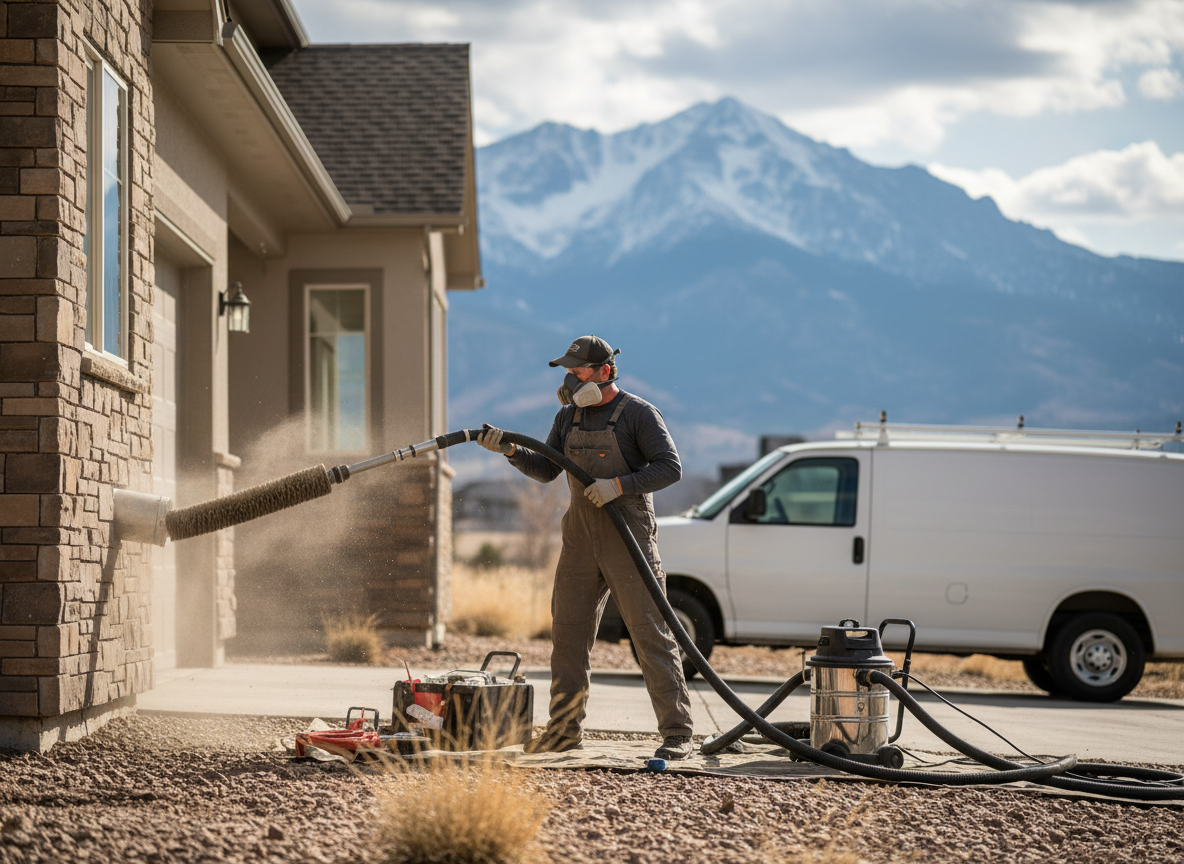
Technicians begin by confirming the exterior termination near Pikes Peak foothills is clear of snow and ice, then disconnect the dryer and run a rotary brush through the full line. Special attention goes to the transition at the wall plate where soil movement from freeze-thaw cycles can shift connections and create gaps. After vacuuming, the vent is reassembled and the dryer is tested for proper airflow so homeowners in Manitou Springs or Rockrimmon know the job is complete before the next cold snap.
Homeowners in Security-Widefield and Fountain often call after noticing clothes still damp after an hour because their vents exit into wind-swept yards that pack lint back into the cap. The same high winds that scour Cheyenne Mountain can reverse airflow on poorly terminated vents, pushing debris inward. Regular cleaning prevents the lint layer that ignites at lower temperatures than most people expect, especially when the vent runs through an unheated crawl space during our long winters.
Technician insight
In Colorado Springs, the thing that catches most people out with Dryer Vent Cleaning is how our cold winters and dry high-plains air combine in older homes around Old Colorado City—longer dryer runs pack lint into runs that shift slightly each freeze-thaw cycle, something homeowners rarely notice until drying times double.
Blocked Vent in Broadmoor Residence
Homeowner reported clothes taking two cycles to dry during a cold snap. Inspection revealed compacted lint and dust in a 25-foot run with three elbows common to 1960s Broadmoor construction. The line was cleared end-to-end and the exterior cap was freed of wind-driven debris. Drying times returned to normal with no further service calls that winter.
How it works
- 1
Initial Inspection
Technician checks exterior vent termination, dryer location, and run length in the specific Colorado Springs home to identify access points and potential obstructions from age or terrain.
- 2
Disconnection and Safety Check
Dryer is safely disconnected, gas or electric supply verified, and flexible sections examined for collapse common in older El Paso County construction.
- 3
Mechanical Cleaning
Rotary brush and vacuum remove lint and dust from the entire line, paying special attention to elbows and the wall plate where freeze-thaw movement often creates gaps.
- 4
Reassembly and Airflow Test
Vent is reassembled with proper seals, dryer reconnected, and a final airflow test confirms performance before leaving the property in neighborhoods like Manitou Springs.
Pricing
Pricing varies with vent length, number of elbows, and access difficulty typical of older homes in Old Colorado City versus newer builds in Briargate; call 24/7 for an on-site assessment.