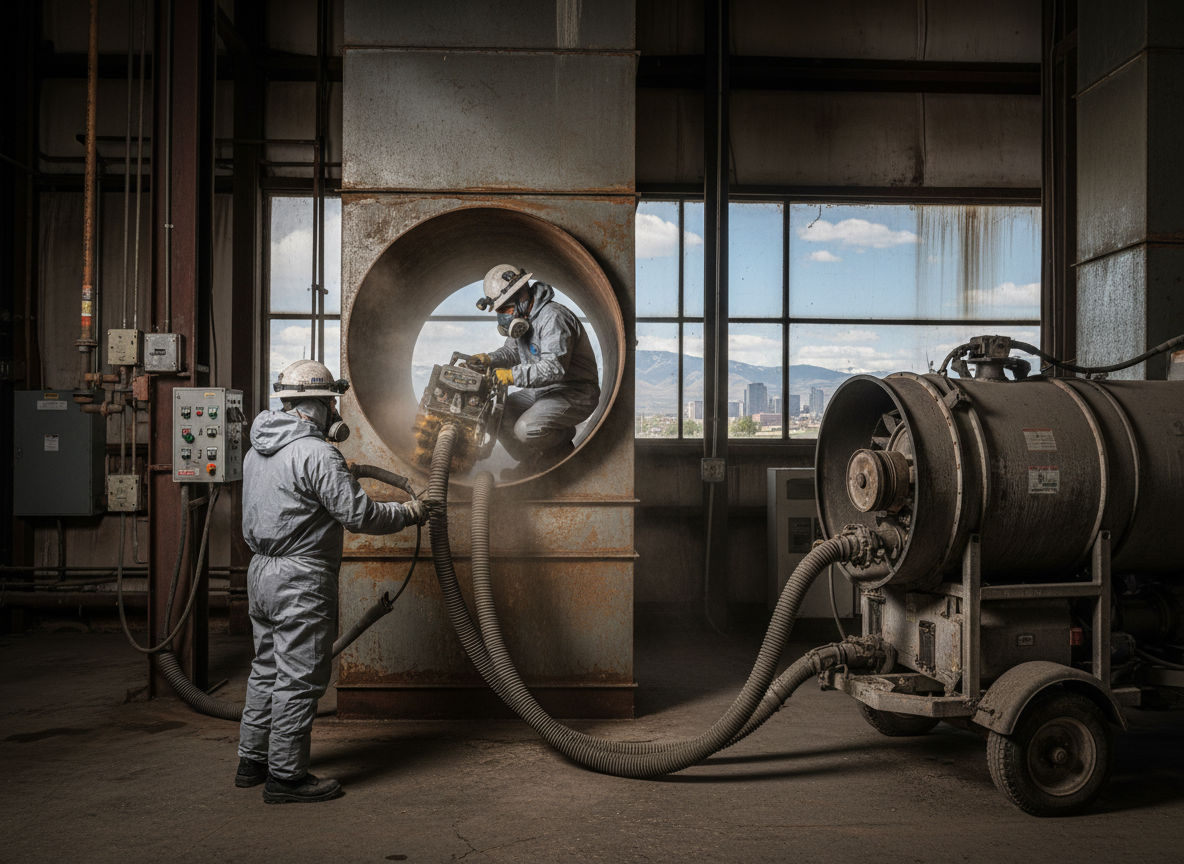
Industrial air duct systems in El Paso County face constant challenges from the semi-arid high-plains climate. Hot summers drive heavy cooling loads while cold winters push heating systems hard, circulating fine dust and pollen through large duct networks in warehouses, manufacturing spaces, and institutional buildings. Properties near the United States Air Force Academy or along the Front Range often have older galvanized or spiral ductwork that traps debris in long horizontal runs and high-velocity sections.
Access limitations change the job on the ground. Facilities in Briargate or near Cheyenne Mountain frequently have ducts routed through tight mechanical rooms, above suspended ceilings, or across uneven terrain that limits equipment placement. Technicians must isolate zones without shutting down entire operations, using negative-air machines sized for high CFM demands and inspecting for insulation degradation caused by wide temperature swings between day and night.
Contaminant profiles differ from residential work. Industrial spaces collect metal shavings, welding residue, and construction dust from ongoing site activity in addition to the usual outdoor infiltration from Pikes Peak winds. Proper cleaning requires source removal methods that reach branch lines and return plenums without dislodging existing insulation or damaging fire dampers common in larger El Paso County buildings.
Seasonal timing matters. Scheduling during shoulder months reduces conflict with peak heating or cooling demands, yet many facilities wait until winter when cold-weather operation reveals airflow restrictions. Pre-job scoping identifies access points and confirms damper positions before any equipment enters the system.
Technician insight
In Colorado Springs the thing that catches most people out with Industrial Air Duct Cleaning is underestimating how much fine dust from the high-plains wind gets pulled into rooftop intakes on buildings near Garden of the Gods or Old Colorado City; those long horizontal runs in older industrial stock hold far more material than the drawings suggest and require extra time to reach.
Warehouse near Security-Widefield
A distribution facility reported uneven airflow and visible dust on products. Inspection showed heavy accumulation in the main trunk running across the roof deck, worsened by constant winter heating cycles. Crew isolated the line, used extended rotary tools to reach the full length, and restored balanced airflow without interrupting daytime operations.
How it works
- 1
Site Assessment
Walk the mechanical rooms and map duct routes in the specific facility, noting access points and any fire or smoke dampers.
- 2
Zone Isolation
Set up containment and negative pressure to keep the rest of the building operational while cleaning targeted sections.
- 3
Source Removal
Use rotary brushes and HEPA vacuum equipment sized for industrial duct diameters to extract debris from mains and branches.
- 4
Post-Clean Verification
Inspect cleaned sections with cameras and confirm airflow returns to design specifications before restoring full system operation.
Pricing
Pricing depends on total linear footage, number of access points required, and whether work occurs during off-hours.