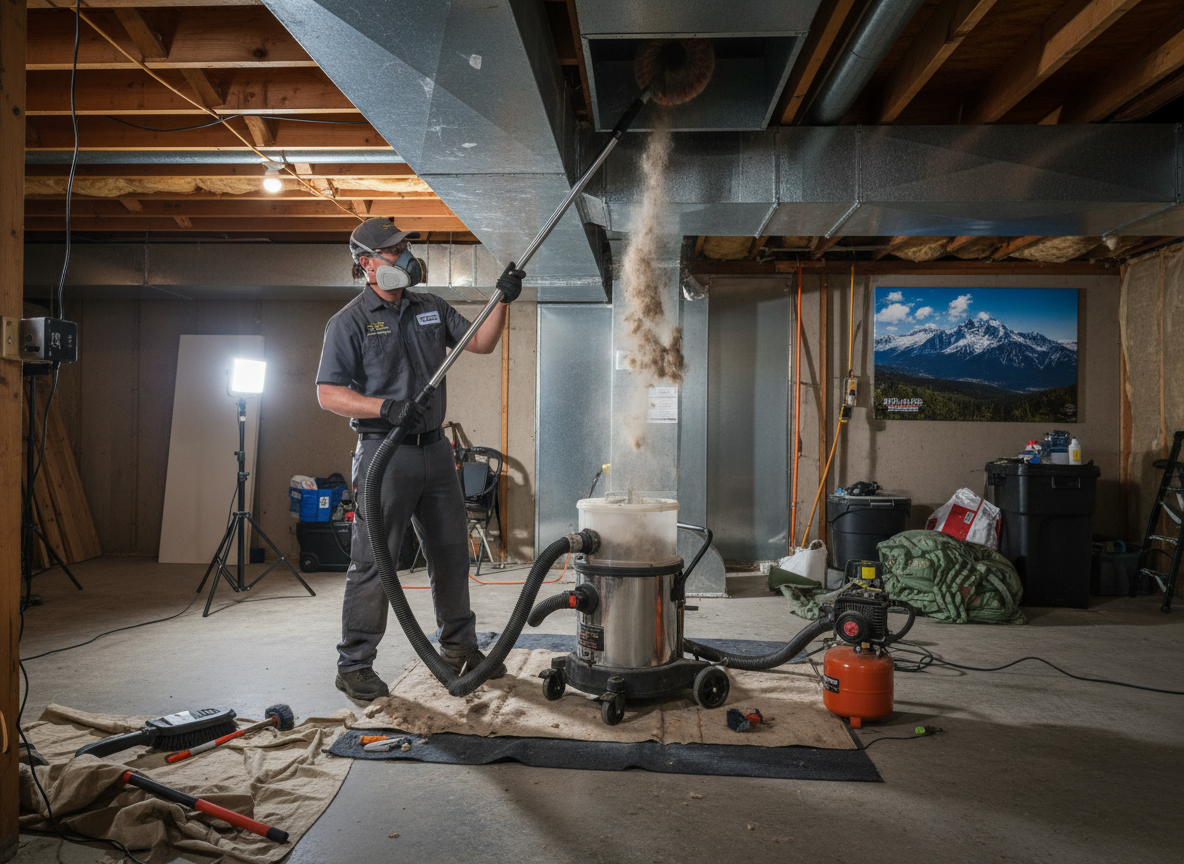
Pet hair builds up rapidly in Colorado Springs duct systems because the semi-arid high-plains climate keeps indoor air dry and static-prone, pulling fine fur deeper into returns and supply lines. Homes in Old Colorado City and Manitou Springs often have original metal ductwork with seams and joints that trap hair clumps, while newer construction in Briargate and Rockrimmon features flexible runs that collapse under negative pressure during cleaning. Winter cold snaps send pets indoors for longer periods, accelerating shedding into the system, and summer heat combined with Pikes Peak winds introduces extra outdoor dust that mixes with the hair to form stubborn mats.
Standard vacuuming fails on these accumulations because the hair binds with dander and fine soil tracked in from Cheyenne Mountain trails or the Olympic Training Center grounds. Technicians use rotary brushes sized for 4-inch to 8-inch residential trunks common in El Paso County split-levels, followed by HEPA-filtered negative-air machines to prevent redistribution. Near Security-Widefield and Fountain, where newer tract homes sit on flatter terrain, longer straight runs allow faster cleaning but still require multiple access points to reach pet hair lodged at every elbow.
Before any work begins, the system is inspected for disconnected ducts or insulation damage common in 1970s Broadmoor properties, and registers are sealed to contain debris. Post-cleaning, airflow is measured at the nearest return to confirm improvement without guessing at static pressure changes caused by the area’s elevation and temperature swings.
Seasonal Considerations
Dry winters increase static cling while monsoon moisture in late summer can make hair clumps heavier and harder to dislodge without risking duct liner tears in older installations.
Technician insight
In Colorado Springs, the thing that catches most people out with Pet Hair Duct Cleaning is how older ductwork in Old Colorado City and Manitou Springs was never designed for today’s multi-pet households; the dry winters drive animals inside for months, packing hair into every seam, and the elevation makes even moderate suction pull liner apart if you push too hard.
Broadmoor Split-Level With Three Dogs
Homeowners noticed reduced airflow and visible fur on vents during a cold snap. Inspection revealed hair mats at every elbow in the original 1960s trunks. Rotary agitation and negative air extraction cleared the lines without liner damage, restoring even airflow across all registers.
How it works
- 1
Initial System Mapping
Technicians trace every accessible trunk and branch in the home, noting pet traffic patterns and register locations typical of Colorado Springs floor plans.
- 2
Negative Pressure Setup
A HEPA vacuum is connected at the main return and the system is sealed at all registers to contain hair and dander during agitation.
- 3
Rotary Brush Agitation
Forward and reverse passes with nylon brushes sized for local duct diameters loosen embedded fur without damaging seams common in pre-1990 homes.
- 4
Final Airflow Verification
Static pressure and CFM readings are taken at the furnace to confirm restored flow before the equipment is returned to service.
Pricing
Cost depends on number of pets, home size, and duct accessibility; call 24/7 for an on-site assessment.